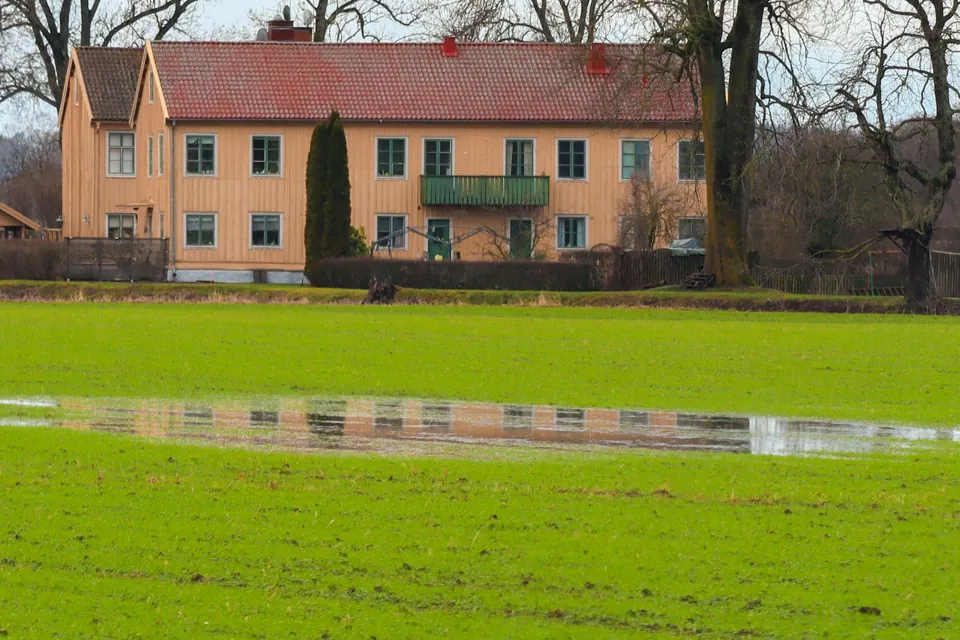
A puddle that appears during a storm
Look for incoming water from roof outlets, paving, or a higher part of the yard. A low spot can trap that flow. Catch basins, grading, and swales are possible options when the main problem is water moving across the surface.
Ground that remains soft afterward
Slow infiltration, compaction, repeated runoff, or subsurface seepage can keep a yard wet. Record how long it takes to dry and whether nearby ground behaves differently. A professional may assess soil and elevations before considering subsurface drainage.
Mud in a well-used backyard
Foot traffic can worsen a saturated area, but fresh seed or sod will not remove the water source. Addressing the drainage first makes it easier to plan lawn restoration and keep access routes usable.
Water near the foundation or a damp crawl space
Check roof-water discharge and exterior slopes, but do not assume exterior drainage is the only cause of indoor moisture. A separate moisture or building assessment may be needed.
What to record before an assessment
Take a wide view of the wet area and a second view showing the uphill side. Note the rain timing, how long water remains, and any recent paving or landscaping changes. Photograph only from a safe position and avoid including people or identifying documents.
What affects the approach and quote?
The extent and timing of the problem, slope and drainage path, soil and existing drainage, equipment access, route length or depth, outlet feasibility, and restoration needs all affect the appropriate approach and quote. A site-specific review is needed before a scope can be defined.
Before excavation
Before digging, contact Virginia 811 to request utility locating. If work may affect a state-maintained road right-of-way, entrance, roadside ditch, or culvert, review VDOT land-use permit guidance. Requirements depend on road ownership and project scope.
Questions about standing water & wet yards
Do I need a French drain for a wet yard?
Not necessarily. Surface pooling may call for grading, a swale, or a catch basin. Roof runoff may need downspout routing. A French drain may help with some saturated-soil conditions. The source, elevations, soil, and outlet should guide the choice.
What should I note when my lawn has standing water?
Record where water first appears, what drains toward it, and how long it remains after rain. Photos taken during and after a storm can help a professional understand the pattern. You do not need to identify the right drainage system yourself.